
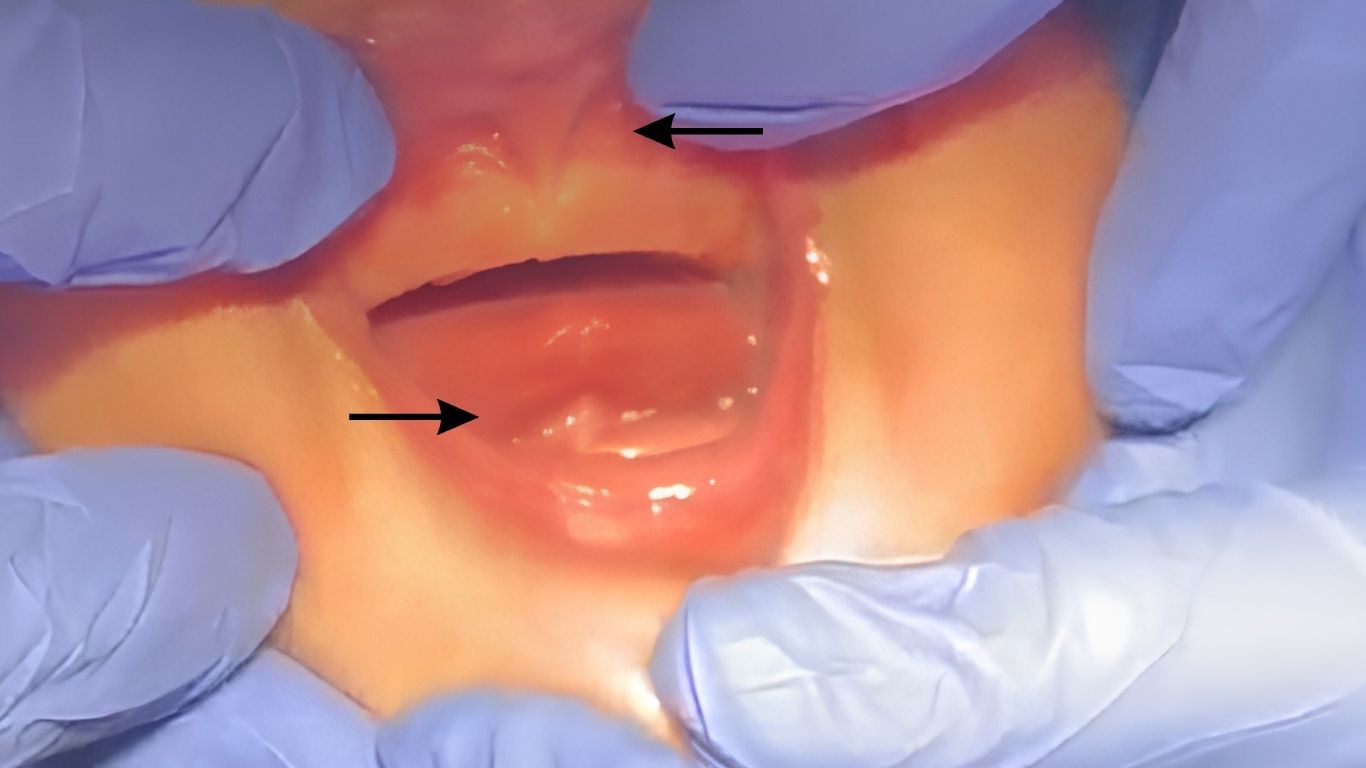
Baby Struggling to Breastfeed? How a Gentle Laser Tongue Tie & Lip Tie Release Helped Baby Feed More Comfortably
Difficulty breastfeeding is stressful for both the baby and the parents. When every feed is a struggle, parents naturally wonder if they are doing something wrong. Sometimes, however, the problem isn’t the feeding technique – it may be caused by a condition called tongue tie (ankyloglossia) or lip tie, which can restrict the normal movement of the tongue and upper lip.
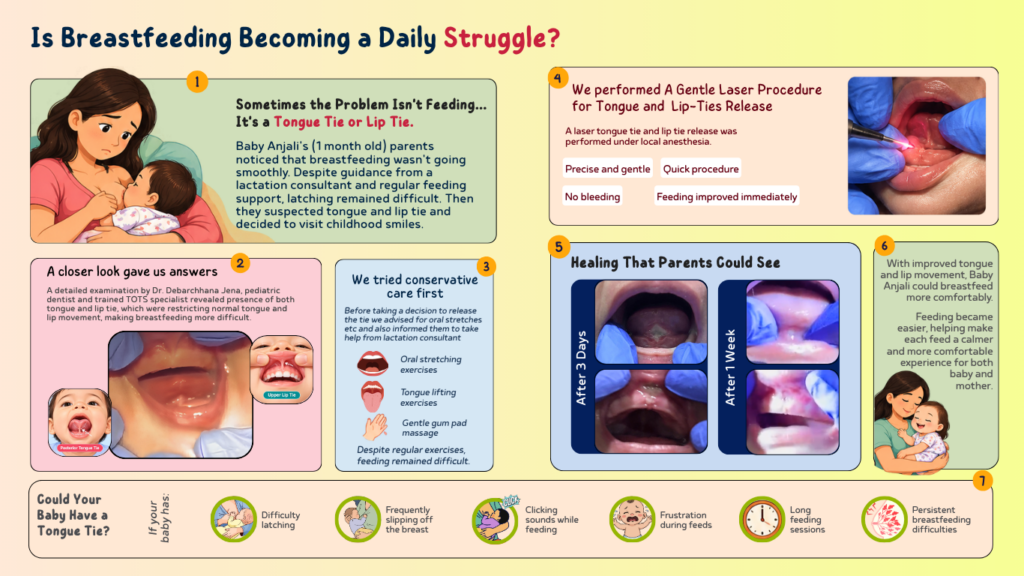
This is the story of one month old baby, whose breastfeeding difficulties led her parents to seek expert care at Childhood Smiles – Exclusive Pediatric Dentistry & Orthodontics, where Dr. Debarchhana Jena, Pediatric Dentist, diagnosed a posterior tongue tie and lip tie and performed a gentle laser release procedure.
Overview
Name: Anjali (Pseudo name for confidentiality purposes)
Gender: Female
Age: 1 Month
Main Concern: Difficulty breastfeeding and poor latch
Diagnosis: Tongue Tie and Lip Tie
Treatment: Laser Tongue Tie & Lip Tie Release
Doctor: Dr. Debarchhana Jena
Outcome:
- Improved tongue mobility
- Better breastfeeding latch
- More comfortable feeding
- Happy baby and relieved parents
When Breastfeeding Doesn't Feel Right
Baby Anjali’s parents noticed something that many new parents experience but often struggle to explain – breastfeeding was difficult.
Despite their best efforts, breastfeeding remained challenging, and the baby had difficulty latching properly. Concerned about her feeding, they first consulted a lactation specialist, who suspected that a tongue tie and lip tie could be contributing to the problem.
Seeking confirmation and appropriate treatment, they visited Childhood Smiles.
A Detailed Evaluation
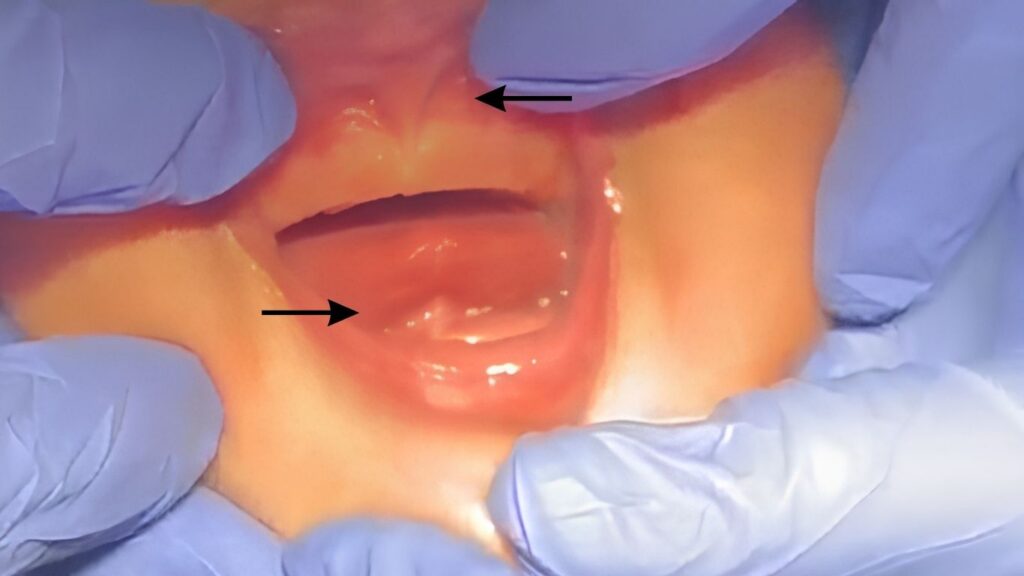
At Childhood Smiles, Dr. Debarchhana Jena performed a thorough clinical examination.
The evaluation confirmed the presence of:
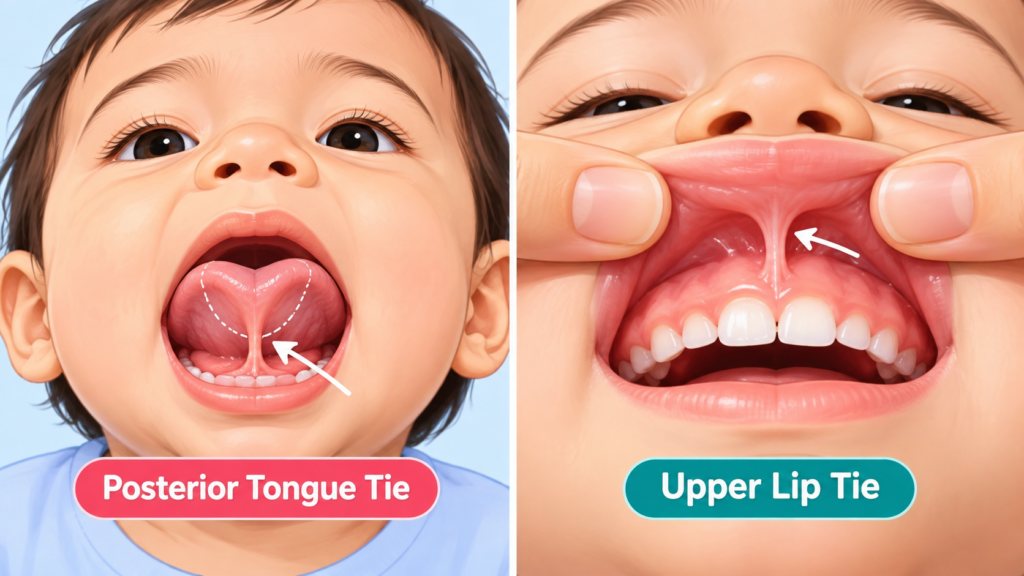
- Posterior tongue tie
- Upper lip tie
Both conditions can limit the natural movement required for an effective latch during breastfeeding.
Instead of rushing into treatment, the family was initially advised to continue:
- Oral stretching exercises
- Tongue lifting exercises
- Gentle gum pad massage
The aim was to monitor improvement with conservative care while working closely with the lactation specialist.
What to Expect During a Tongue Tie & Lip Tie Evaluation at Childhood Smiles
During the visit, we typically assess:
- Feeding history and current concerns
- A gentle examination of the baby’s mouth
- Tongue and upper lip movement and attachment
- Discussion with parents about symptoms and feeding challenges
- Whether conservative measures may help first
- Whether a tongue-tie or lip-tie release is actually indicated
Our goal is to recommend only what is best for your baby – not more, not less.
When Conservative Care Isn't Enough
During the follow-up visit, Baby Anjali’s parents explained that breastfeeding difficulties were still continuing despite regular exercises.
The lactation specialist also recommended releasing the restrictive tissue to improve feeding.
After discussing the available treatment options, expected benefits, post-operative care, and follow-up, the decision was made to perform a laser tongue tie and lip tie release.
Why Laser?
At Childhood Smiles, laser technology is preferred for suitable tongue tie and lip tie procedures because it allows treatment to be performed with precision while minimizing tissue trauma.
Some advantages of laser-assisted release include:
- Gentle and precise procedure
- Minimal bleeding
- Better visibility during treatment
- Reduced tissue trauma
- Faster healing
- Comfortable recovery for infants
Every child is individually evaluated before recommending any treatment.
Tongue-Tie Release by Laser
The Procedure
The treatment was carried out under local anesthesia only.
After following all laser safety protocols:
- A small amount of local anesthetic was administered.
- The tongue tie and lip tie were carefully released using a diode laser.
- Only minimal bleeding was observed.
- Hemostasis was achieved successfully.
One of the biggest advantages of this procedure is that feeding can usually begin immediately after treatment, allowing babies to start using their newly improved tongue and lip movement right away.
Baby Anjali’s mother was encouraged to breastfeed immediately after the procedure.
Lip-Tie Release by Laser
Recovery and Follow-Up
Good treatment doesn’t end when the procedure is over.
Proper healing after tongue tie release depends on following the recommended post-operative exercises and attending scheduled reviews.
Baby Anjali’s parents were advised to continue:
- Oral stretching exercises
- Tongue lifting exercises
- Gum pad massage
- Breastfeeding
- Guidance from their lactation specialist
Follow-up appointments were scheduled after:
- 3 days
- 1 week
- 1 month
Healing Progress
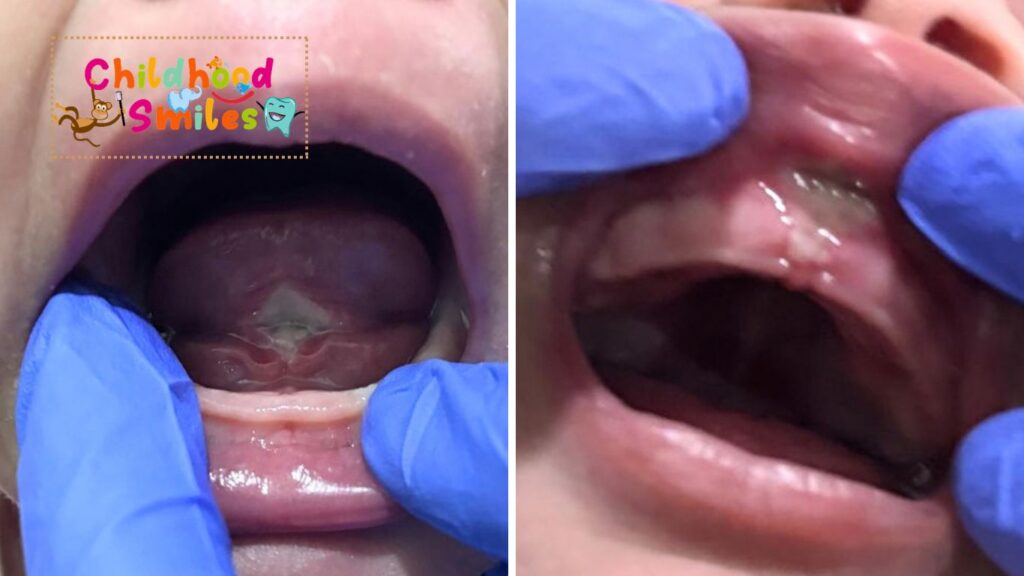
One of the most reassuring parts of this journey was watching the healing process.
Three-Day Review
At the first review, the surgical sites were healing well.
The tissues appeared healthy, and the normal healing process was progressing as expected.
The parents were encouraged to continue the stretching exercises, which play an important role in preventing reattachment.
One-Week Review
At the one-week follow-up, healing had progressed further.
The treatment areas showed healthy recovery, demonstrating the benefits of careful post-operative care combined with regular follow-up.
This stage is particularly reassuring for parents, as they can clearly see the healing process and gain confidence that their baby’s recovery is progressing well.
Why Early Diagnosis Matters
Tongue tie and lip tie are not always obvious.
Many babies simply appear to have “feeding problems,” while the underlying cause remains undiagnosed.
Some signs that may indicate tongue tie or lip tie include:
- Difficulty latching during breastfeeding
- Poor milk transfer
- Frequent slipping off the breast
- Clicking sounds while feeding
- Long feeding sessions
- Frustrated or tired baby during feeds
- Maternal nipple pain during breastfeeding
- Poor weight gain in some infants
Not every feeding difficulty is caused by tongue tie, but an evaluation by the appropriate healthcare professionals can help identify the underlying reason.

What Parents Can Learn From This Story
Every child is different, but this patient’s journey highlights several important lessons for parents:
- Feeding difficulties don’t always mean poor breastfeeding technique. Sometimes an underlying oral restriction such as a tongue tie may contribute to the problem.
- Tongue tie is only one possible cause.A careful clinical evaluation is important before deciding on treatment.
- A multidisciplinary approach can help. Support from a lactation consultant, pediatrician, and pediatric dentist often leads to the best outcomes.
- Not every tongue tie requires treatment. Many babies improve with positioning, feeding guidance, and observation. A procedure is recommended only when clinically indicated.
- Early diagnosis can prevent prolonged feeding struggles. Identifying the cause early may help babies feed more comfortably and reduce stress for parents.
- Follow-up care matters. When a release is performed, stretching exercises, feeding support, and regular follow-up are important for optimal healing and function.
Every Baby Deserves Comfortable Feeding
Feeding should be a bonding experience – not a daily struggle.
When babies are unable to latch comfortably, both parents and infants can experience unnecessary stress. Early assessment allows concerns to be identified and addressed before they become more challenging.
For Baby Anjali, a carefully planned laser tongue tie and lip tie release, combined with continued guidance and follow-up, supported a smooth healing process and helped her family move forward with greater confidence.
Concerned About Your Baby's Feeding?
If your baby is experiencing:
- Difficulty breastfeeding
- Poor latch
- Feeding frustration
- Suspected tongue tie or lip tie
An early evaluation by an experienced pediatric dentist, working alongside your lactation consultant when appropriate, can help determine the cause and recommend the most suitable treatment.
At Childhood Smiles – Exclusive Pediatric Dentistry & Orthodontic Centre, Dr. Debarchhana Jena believes in conservative, evidence-based, child-friendly care tailored to every infant’s unique needs.
If you have concerns about your baby’s feeding, schedule an evaluation and let our team help you make informed decisions for your child’s comfort and well-being.
Important Note for Frequently Asked Questions (FAQs)
A tongue tie (ankyloglossia) is a condition in which the tissue connecting the tongue to the floor of the mouth is unusually short, tight, or thick. This can restrict tongue movement and may affect breastfeeding, bottle feeding, swallowing, and later speech or oral development in some children.
A lip tie occurs when the tissue connecting the upper lip to the gums is tight or restrictive, making it difficult for the upper lip to flange outward during feeding. In some babies, this may contribute to feeding difficulties when combined with other factors.
Some babies with tongue tie may experience:
- Difficulty latching during breastfeeding
- Frequent slipping off the breast
- Clicking sounds while feeding
- Prolonged feeding sessions
- Poor weight gain
- Maternal nipple pain during breastfeeding
However, these symptoms can have several causes, so a professional evaluation is important.
No. Not every tongue tie requires a procedure.
Many babies feed well despite having a tongue tie. Treatment is recommended only when a thorough clinical assessment shows that the tongue restriction is contributing to significant feeding or functional problems.
When performed by an experienced clinician on appropriately selected patients, laser tongue tie release is generally a safe and minimally invasive procedure. Our pediatric dentist will explain the benefits, possible risks, and post-procedure care before recommending treatment.
Many babies are encouraged to breastfeed soon after the procedure. Some families notice improvement quickly, while others may see gradual progress over days or weeks as healing occurs and feeding patterns improve.
Yes. If recommended by our pediatric dentist, gentle stretching exercises help support healing and reduce the chance of the tissues reattaching. Parents are guided carefully on how to perform these exercises at home.
Absolutely. Breastfeeding difficulties can result from several factors, including positioning, latch technique, milk supply, prematurity, or other medical conditions. A comprehensive evaluation helps identify the underlying cause and determine the most appropriate treatment.
If your baby has persistent feeding difficulties, poor latch, prolonged feeding sessions, inadequate weight gain, or if breastfeeding is painful for the mother despite receiving feeding support, it is advisable to schedule an evaluation with our pediatric dentist experienced in infant oral function.
At Childhood Smiles, Dr. Debarchhana Jena provides comprehensive evaluations rather than recommending procedures based on appearance alone. Every baby receives an individualized assessment, and treatment is advised only when clinically indicated. Parents are also guided through post-treatment care and follow-up to support the best possible feeding outcomes.
Important Note for Parents
Every baby is unique.
Breastfeeding difficulties can occur for many reasons. Tongue tie or lip tie is only one possible contributing factor, and not every baby with a tongue tie requires a procedure.
At Childhood Smiles, every infant undergoes an individualized clinical assessment. When needed, we also encourage collaboration with lactation consultants and pediatricians to understand the complete picture before recommending treatment.
Our goal is always to provide the most appropriate, evidence-based care for each child – not simply to recommend a procedure.